
Connecting the world with magnetic
technology
NdFeB, SmCo, AlNiCo, SmFeN & Ferrite Permanent Magnet, Magnetic Assembly Supplier and Manufacturer
40+ years engineering sintered NdFeB, samarium cobalt and ferrite magnets, Halbach arrays, magnetic couplers and encoder magnet assemblies — from magnetic circuit design and 3-7 day prototypes through ISO 9001 volume production in Shenzhen.
Heavy Rare Earth Reduction Technology Breakthrough
40+
Years of Industry Experience
80%
Automated Production
20%
R&D Investment
500+
Our Customers
Application Areas
AIC is committed to investment in product development and technological innovation, breaking through barriers to key core technologies, and consistently delivering excellent value and high-quality services to customers.
View All ApplicationsElectric Motor Application
Rare-earth permanent magnets with high energy product and remanence, widely used in drive motors, servo motors, and generators.
Consumer Electronics
Magnetic materials widely used in smartphones, tablets, laptops, smartwatches, wireless earphones, and other wearable devices.
Magnetic Sensing
Hall-effect magnets, linear encoders, and rotary encoders for position, speed, and magnetic field detection in automation and consumer electronics.
Permanent Magnet Transmission
Contactless torque transfer using magnetic wheels, couplers, and magnetic gears — no wear, no leakage, ideal for cleanroom and vacuum environments.
Magnetic Adsorption
Permanent magnets used for metal handling, electronic latches, magnetic catches, and industrial fixing systems.
Magnetic Therapy & Wellness
SmFeN rare-earth magnetic insoles and wellness wearables for everyday foot comfort, circulation support, and magnetic therapy in daily life.
Products & Services
Technical specifications and application guidance
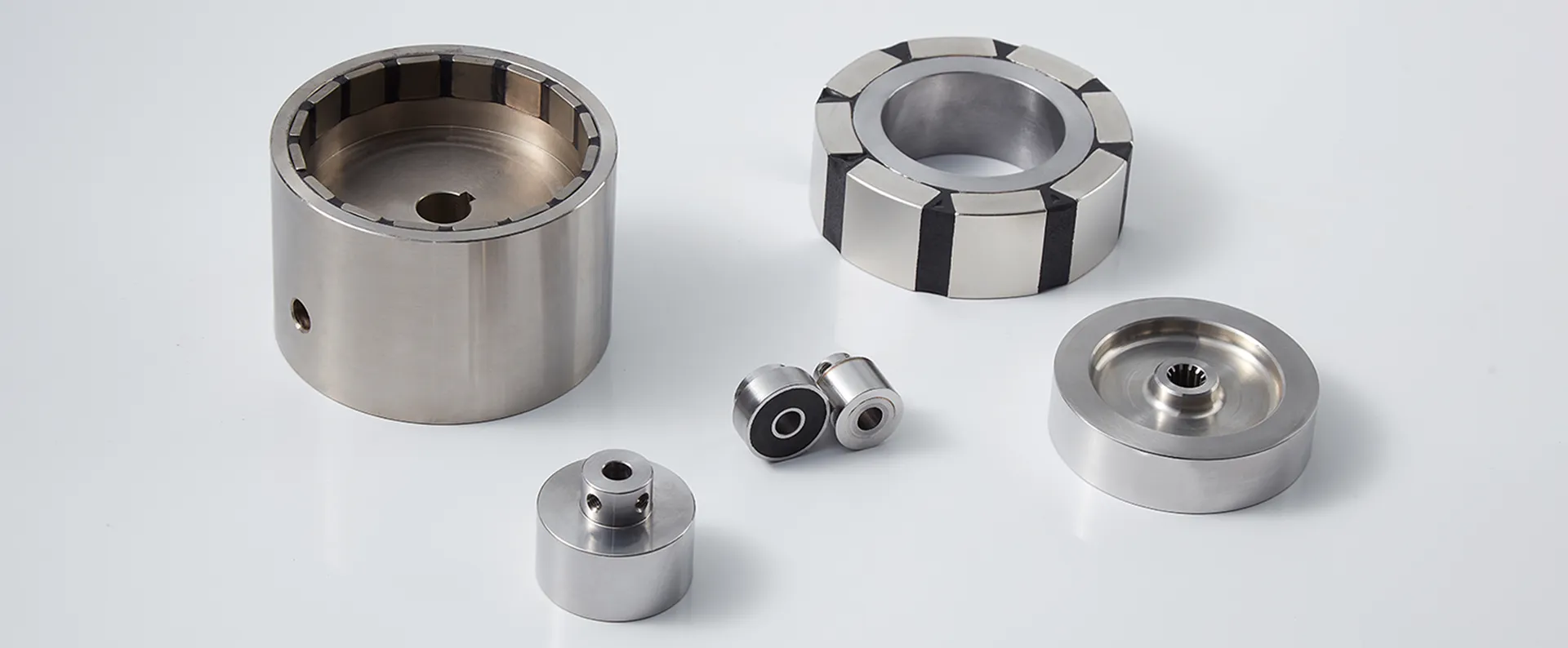
Magnetic Coupler
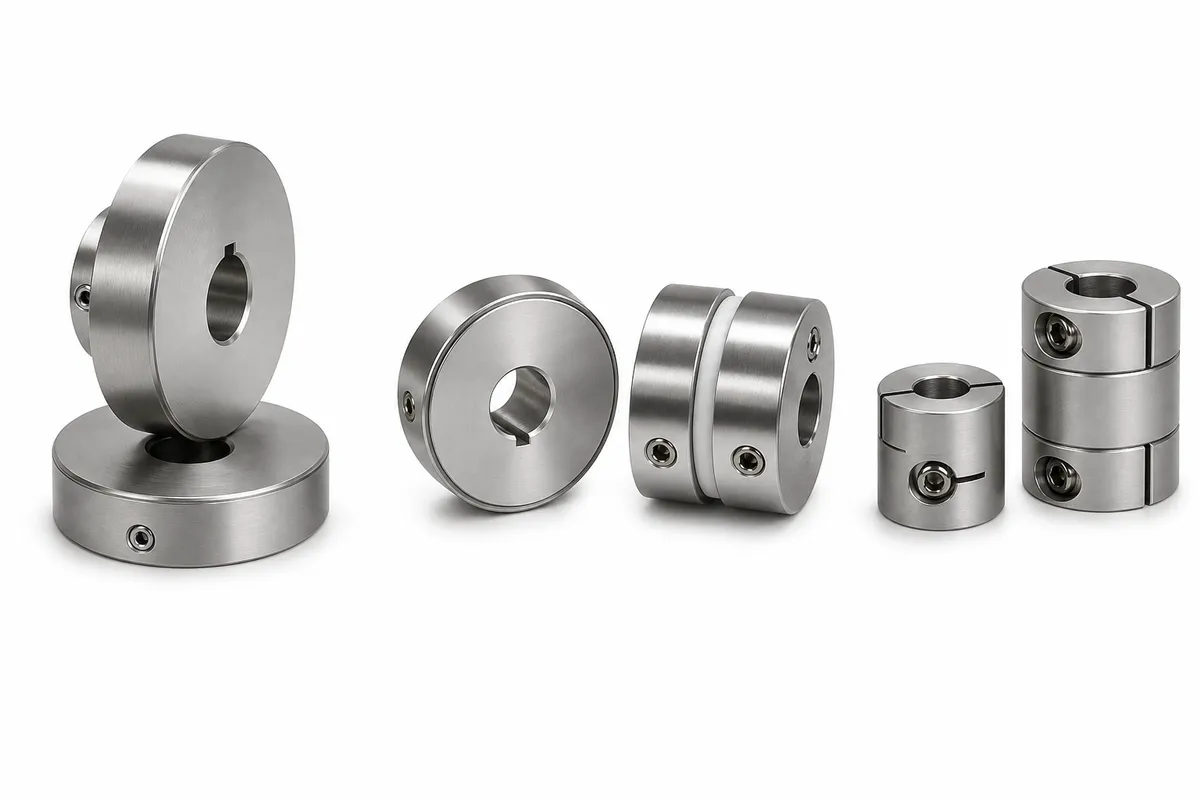
Magnetic Gear
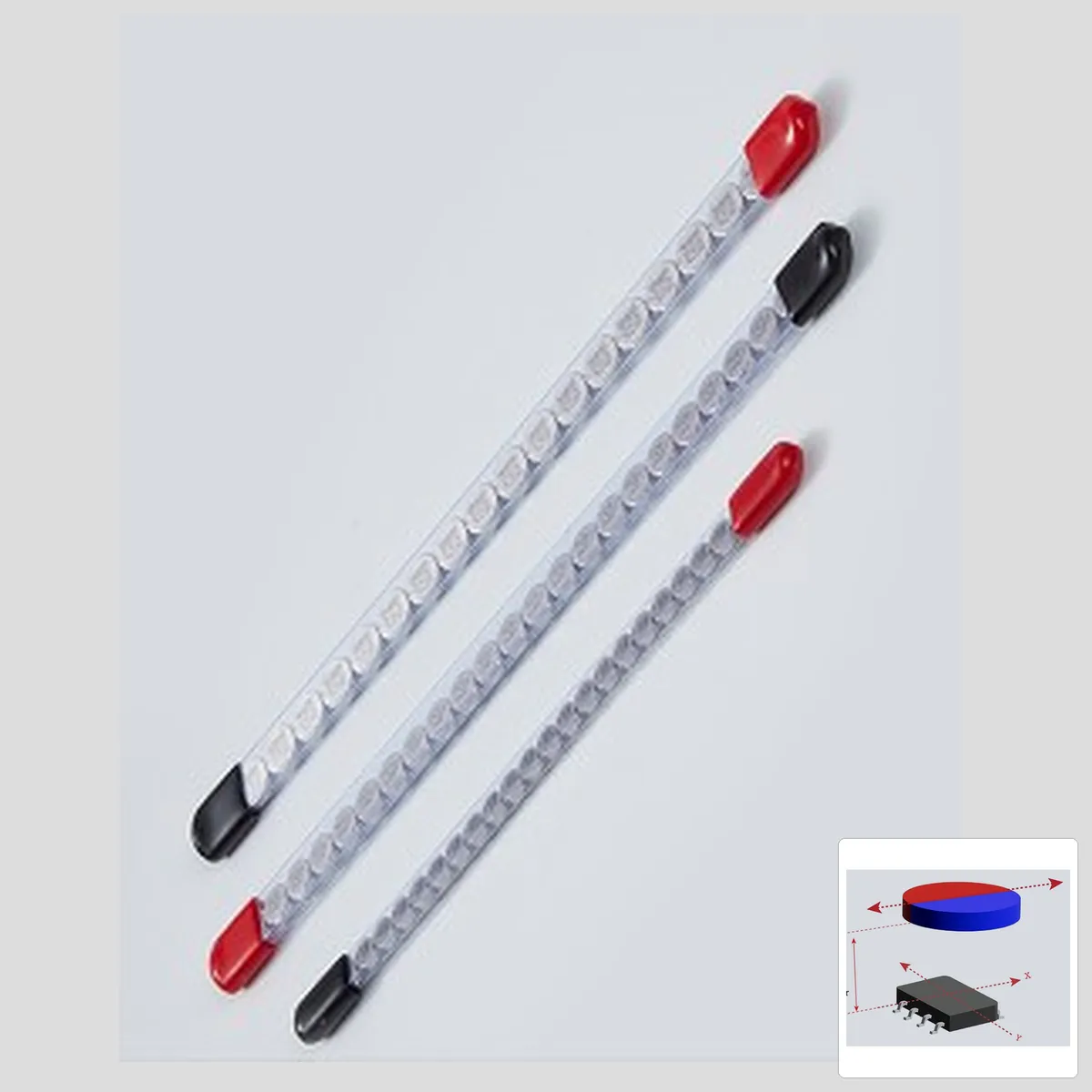
Hall Effect Sensor Disc Magnet
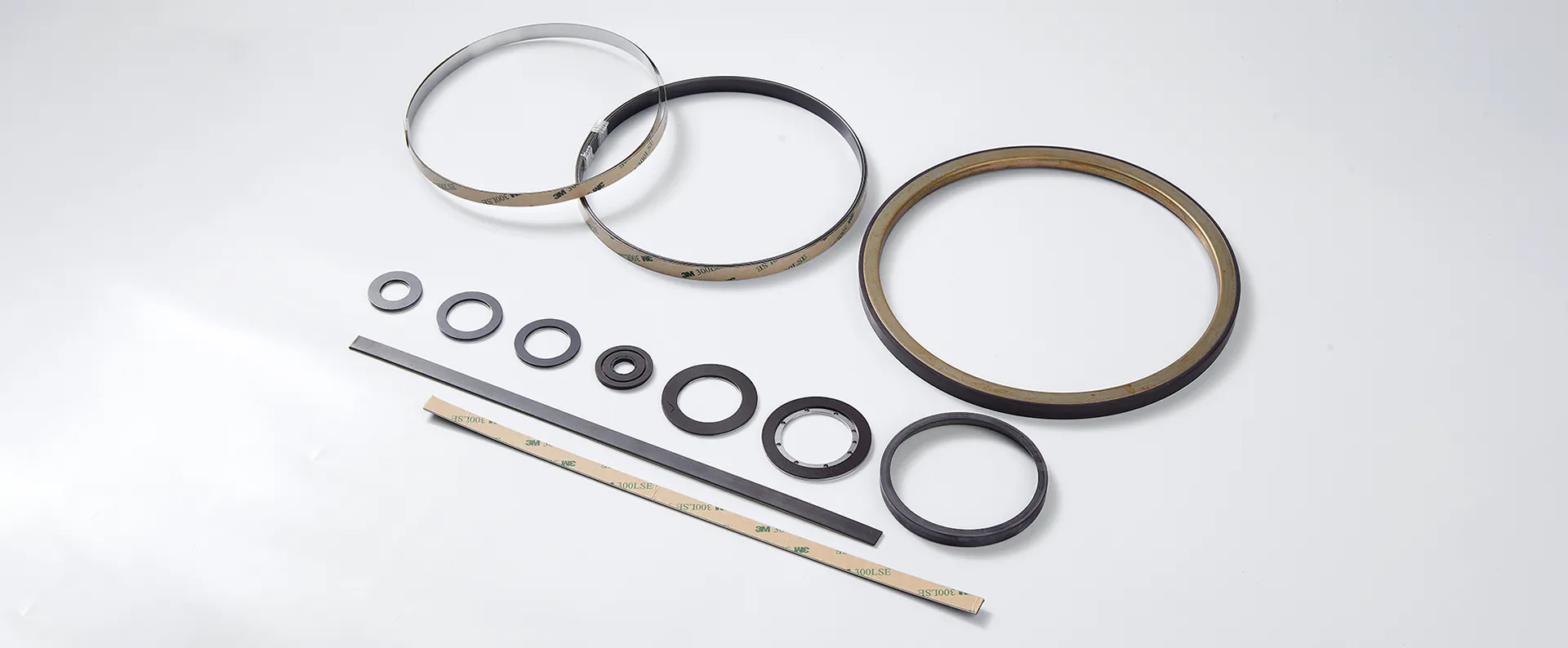
Precision Rotary Encoder Magnet
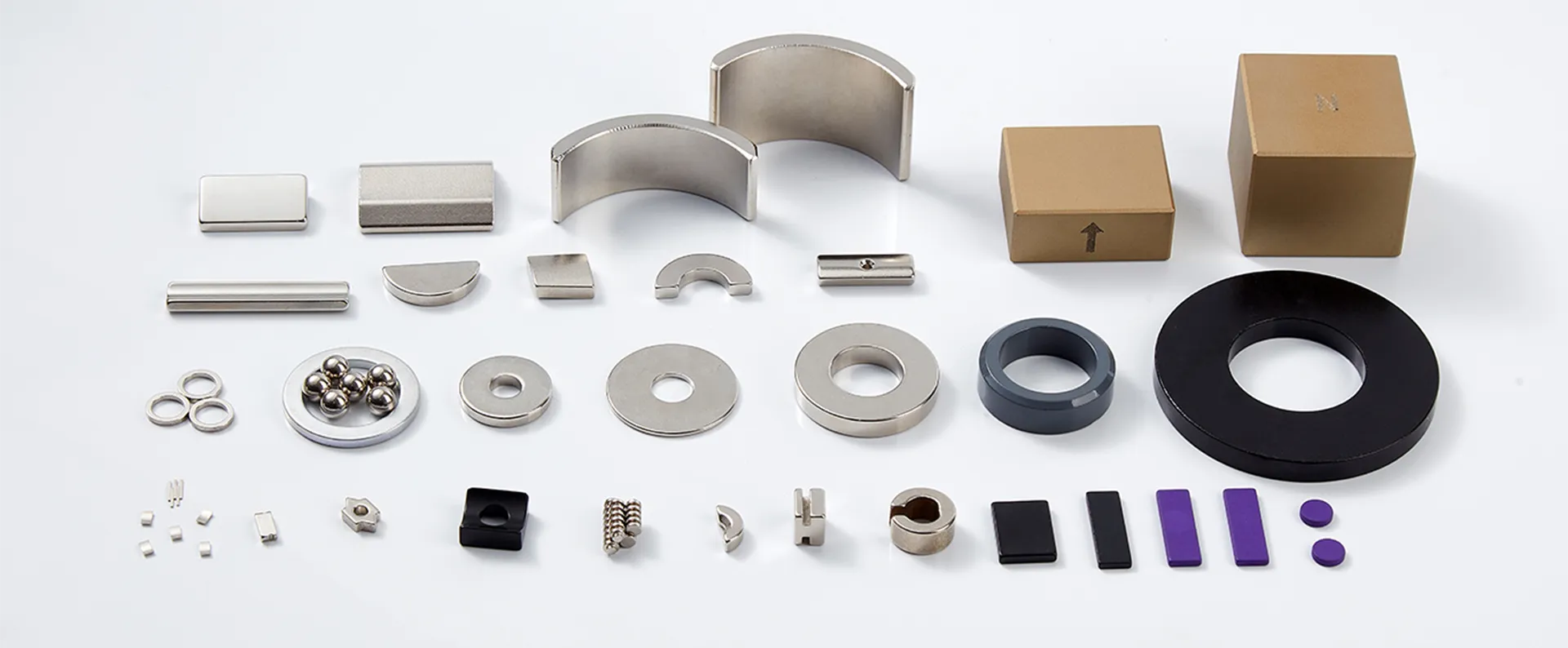
Sintered NdFeB Magnet
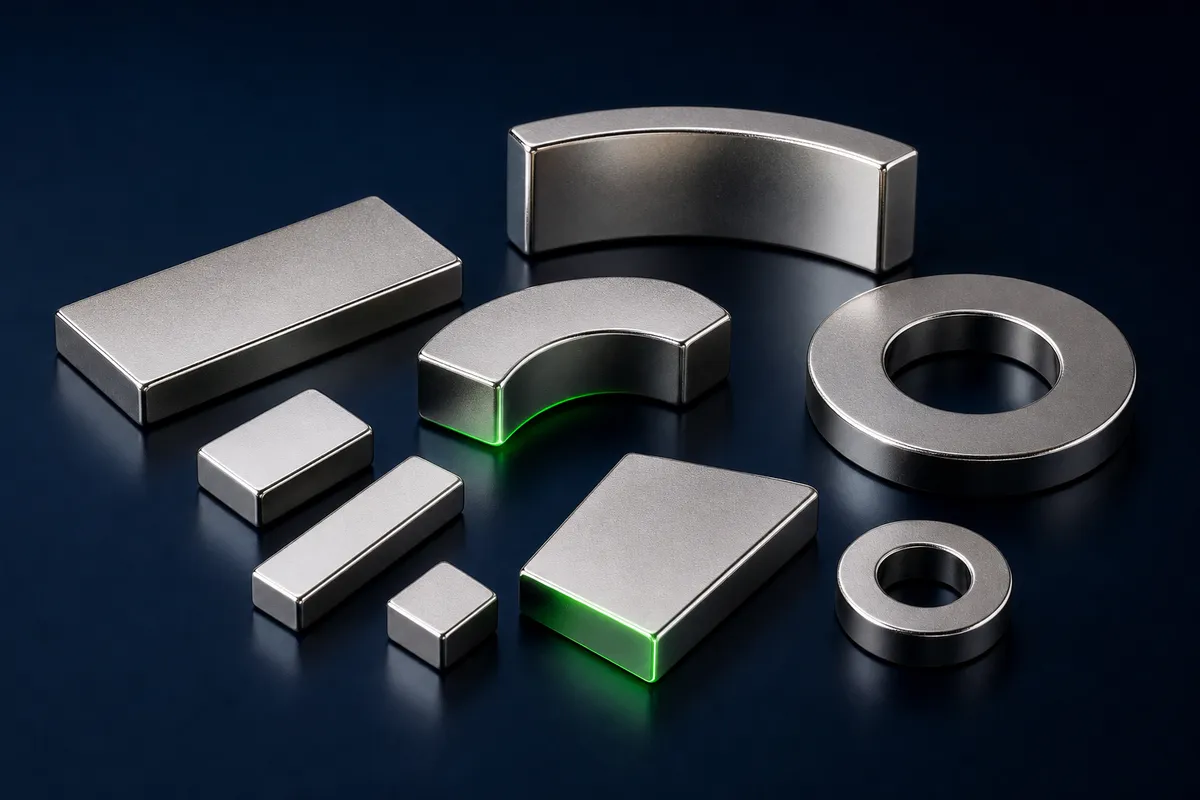
Heavy-Rare-Earth-Free NdFeB Magnet
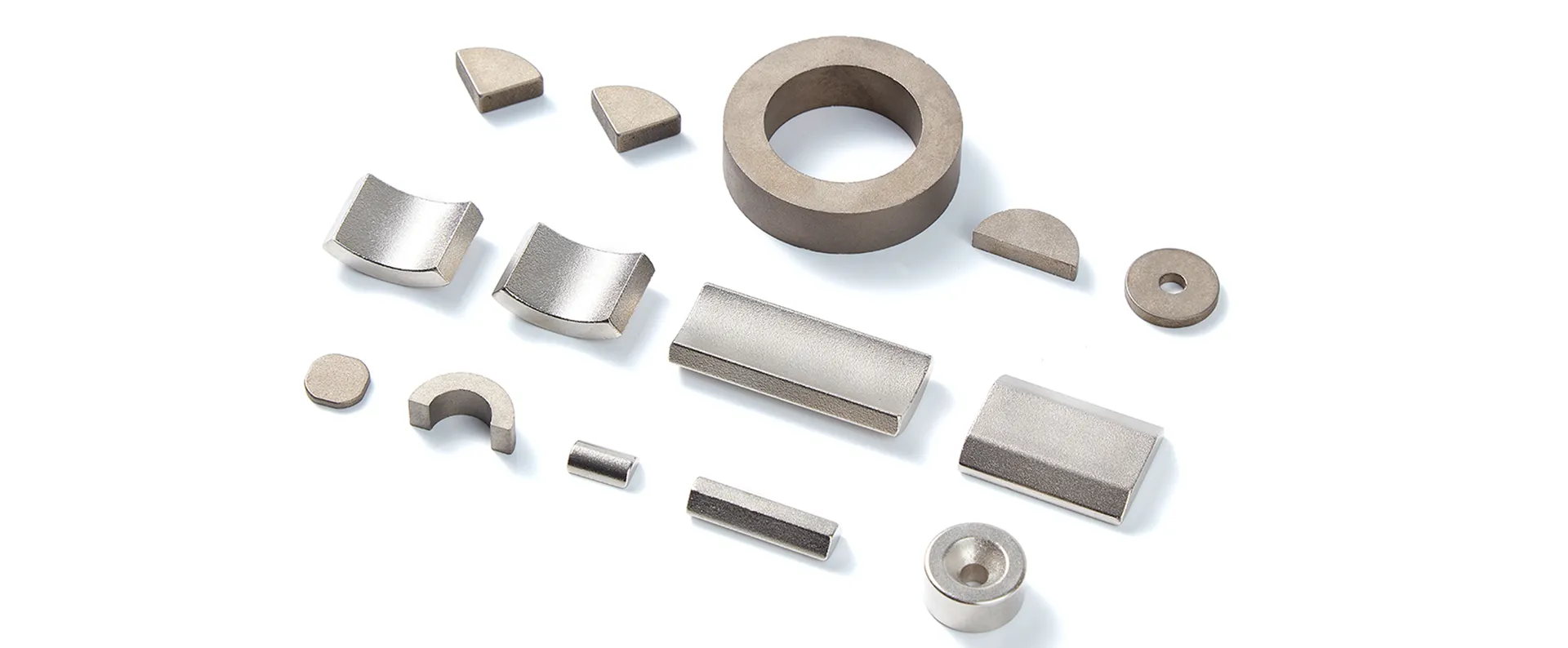
Sintered Samarium Cobalt (SmCo) Magnet
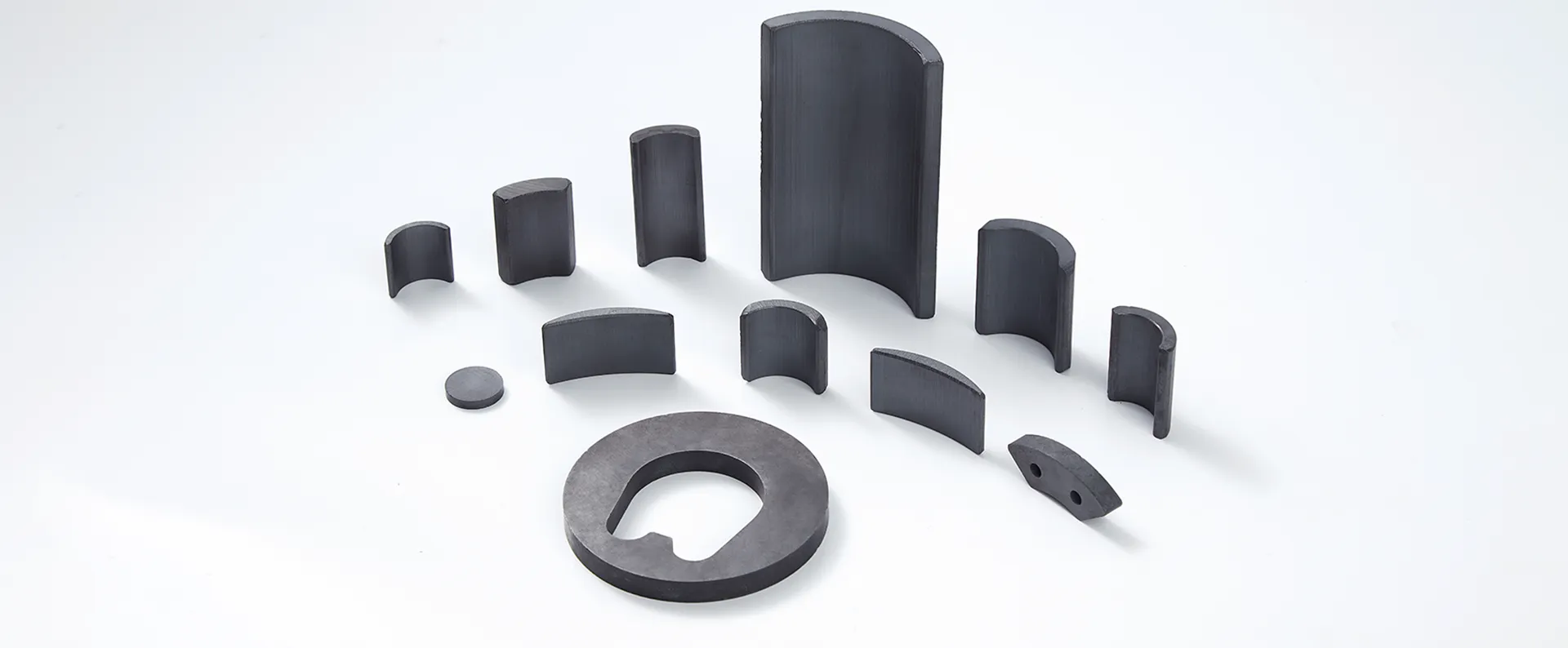
Ferrite Magnet
Professional magnetic materials and solution supplier
AIC Engineering Ltd. has more than 40 years of experience in magnetic materials and magnetic component manufacturing — an integrated R&D, production, and sales magnetic technology company.
We are committed to high-quality, high-performance solutions and services through technological innovation and product optimisation.
ISO Certified
ISO 9001:2015 quality management
Environmental Mgmt.
ISO 14001 environmental management
Automotive Quality
IATF 16949 automotive quality system
High-Tech Enterprise
Shenzhen & national high-tech enterprise recognition
Frequently Asked Questions
Answers to common questions about our magnets, customisation, ordering and shipping.
- What magnetic materials does AIC Engineering manufacture? +
- We produce sintered, bonded, injection-molded and flexible NdFeB magnets, plus SmCo, SmFeN, AlNiCo and ferrite magnets. We also make Halbach arrays, magnetic couplers, encoders, magnetic adsorption assemblies, motor rotor assemblies and Hall-effect sensor magnets.
- Can you make custom magnets? +
- Yes. Our engineers tailor grade, shape, coating and magnetisation pattern to your specification. Rapid prototyping is typically completed in 3–7 days before mass production.
- What is the minimum order quantity (MOQ)? +
- Stock shop items follow the store's order terms. Custom components vary by specification — contact our team for a project-specific quote.
- How long does production take? +
- Prototypes are usually ready in 3–7 days. Mass-production lead time depends on quantity, grade and finishing, and is confirmed with each quote.
- Are your products certified? +
- AIC Engineering is certified to ISO 9001, IATF 16949 and ISO 14001, with about 80% automated production and roughly 20% of revenue invested in R&D, backed by 40+ years of magnetic-materials expertise.
- Do you ship worldwide? +
- Yes, we ship worldwide and provide custom packaging on request.
- How do I request a quote or place an order? +
- Send your requirements (product type, quantity, dimensions, operating conditions) through our Contact page. Our online store is currently in testing, so confirmed orders are arranged with our sales team.
- Which industries do you serve? +
- We serve electric motors, consumer electronics, magnetic sensing, automation, automotive, new energy and medical applications, supplying customers worldwide.
- Does AIC have any branches or subsidiaries? +
- AIC Engineering Ltd. is an independent company with operations solely in Hong Kong and Shenzhen.
- What does AIC stand for? +
- AIC stands for "An Iron Calf." The company was founded in 1996 by Mr. Sonny Lau, who was 24 years old at the time. Embracing the fearless spirit of a "newborn calf that is not afraid of the tiger," he likened himself to an "Iron Calf." He deliberately added the word "An" to the beginning of the name to secure a top position in the alphabetical listings of telephone directories—thereby saving on advertising costs—which ultimately gave rise to the acronym AIC, a name now widely recognized within the magnetic industry.
- What engineering services does AIC Engineering offer? +
- Beyond manufacturing, we provide magnetic application design services: magnetic-circuit analysis, FEA field simulation (flux density, field distribution, force modelling), material selection, and full-cycle engineering support from concept through prototype to mass production. Our engineering team brings 40+ years of application expertise.
- Can AIC help design a custom magnetic circuit from scratch? +
- Yes. We offer end-to-end magnetic solution design — from defining requirements and selecting the optimal magnet grade, to FEA simulation, prototype fabrication (3–7 days) and production ramp-up. We optimise for performance targets such as field strength, torque, force uniformity and thermal stability.
- Where can I find definitions of magnetic-materials terms such as coercivity, remanence and Halbach array? +
- Our Magnetic Materials Glossary page (/glossary) provides concise definitions for coercivity (Hcb/Hcj), remanence (Br), maximum energy product (BH)max, Curie temperature, anisotropy, grain boundary diffusion, Halbach array and more — each entry links to related products so you can move from concept to selection in one click.
- How do I compare magnetic materials such as NdFeB vs SmCo, ferrite or AlNiCo? +
- The Magnetic Materials Comparison page (/compare) offers side-by-side tables for six common pairings — NdFeB vs SmCo, NdFeB vs ferrite, sintered vs bonded NdFeB, SmCo vs AlNiCo, NdFeB vs SmFeN and rigid vs flexible magnets — covering energy product, max operating temperature, temperature coefficient, corrosion resistance and cost, plus "when to choose X / when to choose Y" guidance and links to related products.
- Which magnet material should I choose for high-temperature environments? +
- For continuous use above 150–180 °C, SmCo is the primary choice — AIC supplies high-temperature grades with maximum operating temperatures up to 550 °C. Standard SmCo covers 250–350 °C; AlNiCo suits closed magnetic circuits up to ~500 °C where low Hcj is acceptable. Sintered NdFeB reaches 200 °C only in high-temperature grades (SH/UH/EH). See the comparison tables on /compare for temperature coefficient and selection guidance.
- Which material is best when corrosion resistance is critical and coatings are not allowed? +
- SmCo and SmFeN are intrinsically corrosion-resistant and usually need no coating, making them ideal for skin-contact, medical, marine or humid environments where nickel/zinc/epoxy coatings are unacceptable. Sintered NdFeB, by contrast, requires a protective coating. SmFeN also offers a low temperature coefficient (−0.05 %/°C), close to SmCo.
- What is the difference between sintered and bonded NdFeB? +
- Sintered NdFeB is ~3–4× stronger (35–52 MGOe) and used for high-performance motors and sensors, but is limited to simpler shapes produced by grinding/slicing. Bonded NdFeB (8–12 MGOe) is injection- or compression-moulded, enabling complex shapes, tight tolerances (±0.02 mm) and multi-pole/isotropic magnetisation, at the cost of lower magnetic strength and a 120–150 °C binder-limited temperature. See /compare for the full table.
- What is a Halbach array and what is it used for? +
- A Halbach array is an arrangement of permanent magnets that concentrates the magnetic field on one side while nearly cancelling it on the other, producing a stronger, more uniform single-sided field without extra material. It is used in magnetic couplers, eddy-current brakes, particle accelerators, magnetic levitation and high-field sensor targets. See the Halbach array entry on /glossary and related products.
- Can AIC supply high-temperature SmCo magnets for extreme environments? +
- Yes. AIC Engineering manufactures high-temperature samarium cobalt (SmCo) magnets rated for maximum operating temperatures up to 550 °C — beyond standard SmCo grades (250–350 °C) and typical AlNiCo limits (~500 °C). These magnets combine SmCo's low temperature coefficient, high intrinsic coercivity (Hcj) and excellent corrosion resistance, making them ideal for aerospace actuators, downhole oil & gas tools, turbo machinery and precision instrumentation. Share your temperature, field and mechanical requirements and our engineers will recommend the appropriate grade.
- How do I choose between NdFeB, SmCo and ferrite permanent magnets? +
- Start with four drivers: energy product (size), operating temperature, temperature stability and cost. NdFeB (35–52 MGOe) delivers the strongest flux per unit volume — choose it for miniaturised, high-performance designs (EV motors, sensors, consumer electronics) when continuous temperature stays below ~180 °C (SH/UH/EH grades to ~200 °C); it requires a protective coating and has a Br coefficient of about −0.12 %/°C. SmCo (16–32 MGOe) wins when temperature exceeds 150–200 °C, when flux must stay very stable (Br ~−0.03 %/°C — about 4× better than NdFeB), or when coating is undesirable; standard grades operate to 250–350 °C and AIC high-temperature grades reach 550 °C, with excellent corrosion resistance but cost typically 1.5–3× NdFeB. Ferrite (3.5–4.5 MGOe) is 5–10× cheaper, rare-earth-free and needs no coating, but is ~10× weaker — equal flux needs a much larger magnet; Br coefficient ~−0.18 %/°C and performance drops faster above ~150 °C. Best for cost-sensitive, high-volume uses where size is not constrained (speakers, magnetic chucks, simple motors). Quick rule: maximum flux in minimum volume below ~180 °C → NdFeB; high temperature, low drift or no coating → SmCo; lowest cost, size flexible → ferrite. See /compare for side-by-side tables or contact us with your operating conditions for grade and magnetic-circuit support.
AIC's global presence opens broad career opportunities
We promote a diverse and inclusive culture, embrace each employee's uniqueness, and strive to help everyone reach their full potential.